
The Architect Returns
The Architect Returns
Ahmad Vahidi helped build Iran’s proxy network decades ago. Now he’s back in charge as the system he designed goes to war.
Mar 02, 2026
The Architect Returns: What Ahmad Vahidi’s Appointment as IRGC Commander Means for Iran’s Proxy Network
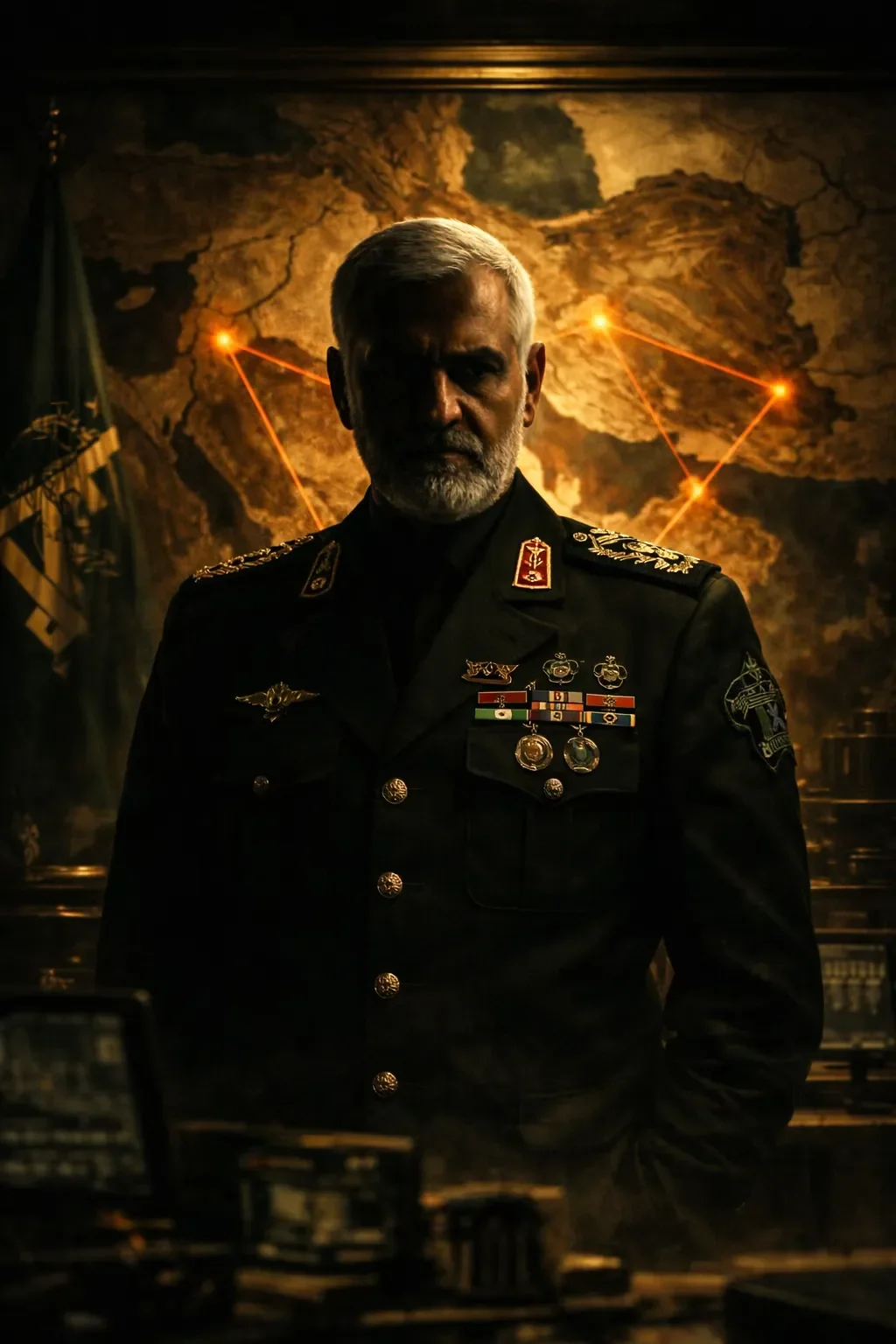
By John Hendricks | Global Recon | March 2026
Based on converging reporting from Israeli, U.S., and regional sources, Iran’s senior military command structure was decapitated in less than 72 hours. The supreme leader is dead. The IRGC chief is dead. The armed forces chief of staff is dead. The defense minister is dead.
And the man Iran has now put in charge of its most powerful military force helped design the system that built every proxy group currently firing rockets across the Middle East.
His name is Ahmad Vahidi. And if you’re trying to understand what comes next in Iraq, Lebanon, and Yemen his record is the map.
Who Is Ahmad Vahidi
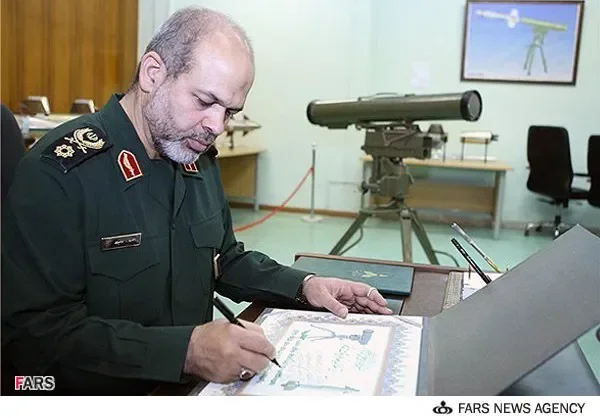
By Fars Media Corporation, CC BY 4.0,
https://commons.wikimedia.org/w/index.php?curid=134749510
Vahidi, 67, joined the Islamic Revolutionary Guard Corps in 1979, in the immediate aftermath of the Islamic Revolution. He rose quickly. By 1981, he was serving as deputy to IRGC commander Mohsen Rezaei for intelligence affairs — one of the most sensitive positions in the early Revolutionary Guards.
What he built in that role matters. According to PBS/Frontline’s Tehran Bureau, Vahidi organized the IRGC’s intelligence directorate and established separate operational divisions for Iraq, the Arabian Peninsula, non-peninsula Arab states, Afghanistan, Lebanon, and North Africa alongside a special operations desk. That organizational architecture, built in the early 1980s, became the blueprint for how Iran would project power externally for the next four decades.
In 1988, following the end of the Iran-Iraq War, the Quds Force was formally constituted as an independent branch of the IRGC. Vahidi became one of its first commanders and later led the force until approximately 1997, when Qassem Soleimani replaced him.
That lineage matters. The man who handed the Quds Force to Soleimani — who then spent two decades expanding the proxy network that produced Kata’ib Hezbollah, armed the Houthis, and embedded militias within Iraq’s PMF is now the man running Iran’s military.
The AMIA File
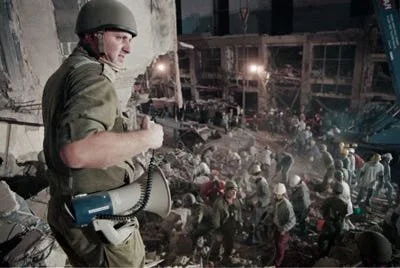
Israeli Defense Forces rescue teams at the AMIA bombing site, Buenos Aires,
July 1994. 85 people were killed in the attack. (IDF Spokesperson's Unit / CC BY-SA 3.0)
Vahidi carries legal exposure that no other active senior Iranian commander does.
On July 18, 1994, a truck bomb destroyed the AMIA Jewish community center in Buenos Aires. Eighty-five people were killed. More than 300 were wounded. It remains the deadliest terrorist attack in Argentine history. Vahidi was a senior Quds Force commander at the time of the attack.
In 2006, Argentine federal prosecutors formally accused Iran of directing the operation. In 2007, Interpol issued a Red Notice for Vahidi which remains active. In April 2024, Argentina’s Court of Cassation ruled that the attack had been planned by Iran and carried out by Hezbollah. The following month, Argentina’s foreign ministry reaffirmed the Interpol notice, citing charges of aggravated murder.
When Mahmoud Ahmadinejad appointed Vahidi defense minister in 2009, Argentina lodged a formal diplomatic protest. When Vahidi visited Bolivia in 2011, the Bolivian interior minister expelled him within days, later issuing a formal apology to Argentina. Vahidi is currently sanctioned by both the United States and the European Union.
None of this prevented his elevation. In the context of Iran’s current crisis, it may have reinforced the signal Tehran wanted to send: continuity, not moderation.
How We Know He’s in Charge: The Proxy-Side OSINT Signal
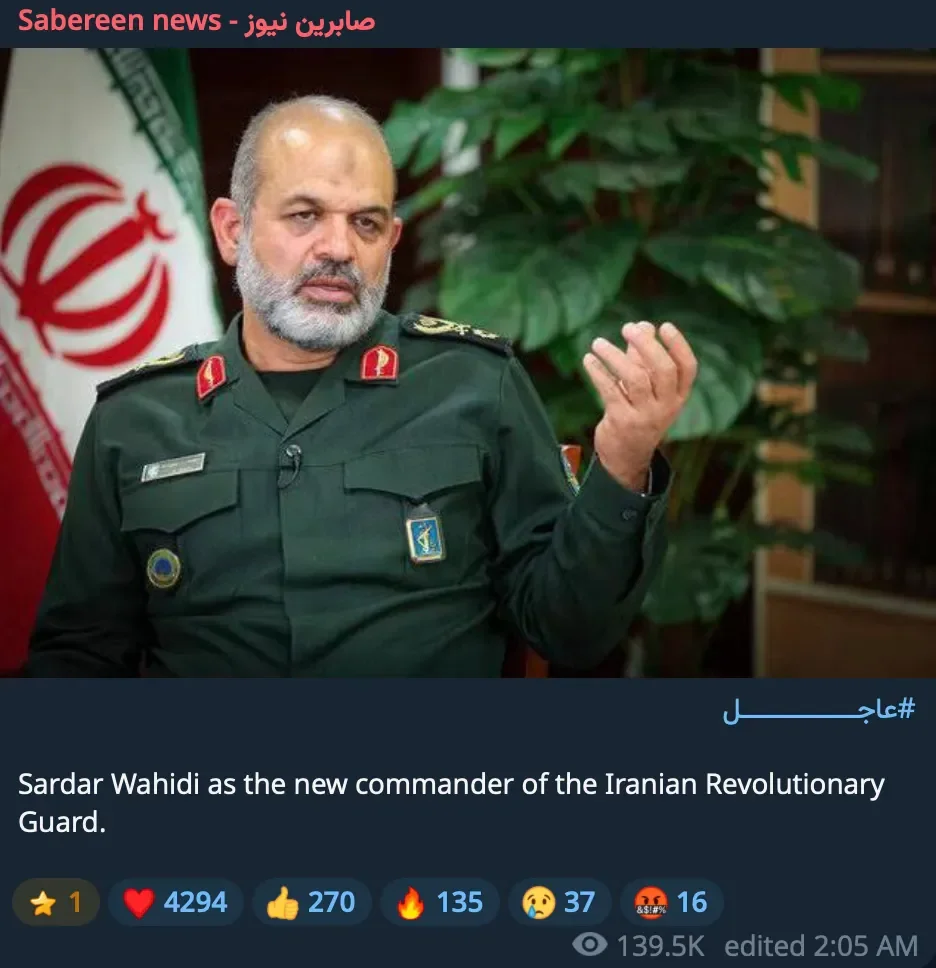
Sabereen News, a Telegram channel affiliated with Iraqi pro-Iranian militia networks, announced Vahidi's appointment as IRGC commander using the honorific 'Sardar' definitive recognition language at 2:05 AM on March 1, 2026, before widely disseminated Iranian state confirmation.
Vahidi’s appointment was later confirmed by Iranian state media, including Khabar Online, on the morning of March 1, 2026. But before that confirmation circulated publicly, Sabereen News had already reported it.
Sabereen News is not a neutral outlet. It is a Telegram-based network affiliated with pro-Iranian militia ecosystems in Iraq the same information space used by Kata’ib Hezbollah, Al-Nujaba, and aligned PMF factions to communicate with fighters and signal legitimacy.
In proxy ecosystems, who reports first and how they report matters. When a militia-affiliated channel uses definitive language such as “appointed,” “Commander,” or “Sardar,” without hedging or attribution, it is not commentary. It is recognition signaling. It tells subordinate commanders and fighters who they are now accountable to, regardless of whether Tehran has completed its internal paperwork.
The absence of counter-messaging is equally revealing. In militia ecosystems, contested legitimacy surfaces quickly: rival channels push alternative names, hedge language proliferates, or silence fractures into contradiction. None of that occurred here.
Before any widely disseminated formal decree from Tehran, militia-affiliated channels across Iraq were already naming Vahidi as the new IRGC commander. In proxy networks, that is not opinion. It is acceptance.
What His Record Implies for Iraq
Vahidi did not simply inherit Iran’s proxy system. Open-source profiles describe him as a key architect of early IRGC intelligence structures and a foundational Quds Force commander meaning he helped shape the external-operations model that later matured into today’s proxy network.
The Iraqi groups now active Kata’ib Hezbollah, Al-Nujaba, Saraya Awliya al-Dam are downstream products of that system. Vahidi did not run them directly. But the doctrine they operate under, and the organizational logic that allows the PMF to function simultaneously as a state institution and an Iranian instrument, is his architecture refined over more than three decades.
That matters because Iraq’s militias were designed to survive leadership loss not to prevent it.
The central question now is not whether Vahidi can command the network. It is whether a network facing its most severe external shock since 2003 becomes more controllable or less predictable under a commander who built it to function without constant centralized direction.
The Open Question
Iran has lost its supreme leader. It has lost the IRGC chief. It has lost the armed forces chief of staff and the defense minister. The formal chain of command was severed at every major node almost simultaneously.
Vahidi’s appointment is Tehran’s answer: restore the original architect and signal continuity to the proxy network.
Whether that signal holds is the central intelligence question of the next 30 days.
If proxy channels remain synchronized posting in parallel, using consistent honorifics, amplifying unified messaging that indicates acceptance of the succession and continued centralized tasking.
If they diverge with smaller factions acting independently, contradictory claims about targets, or fractured messaging that signals contested authority or fragmentation under pressure.
Watch Sabereen. Watch Unit 10,000. Watch Abu Ali al-Askari.
The answer will not come from Tehran. It will come from the channels.
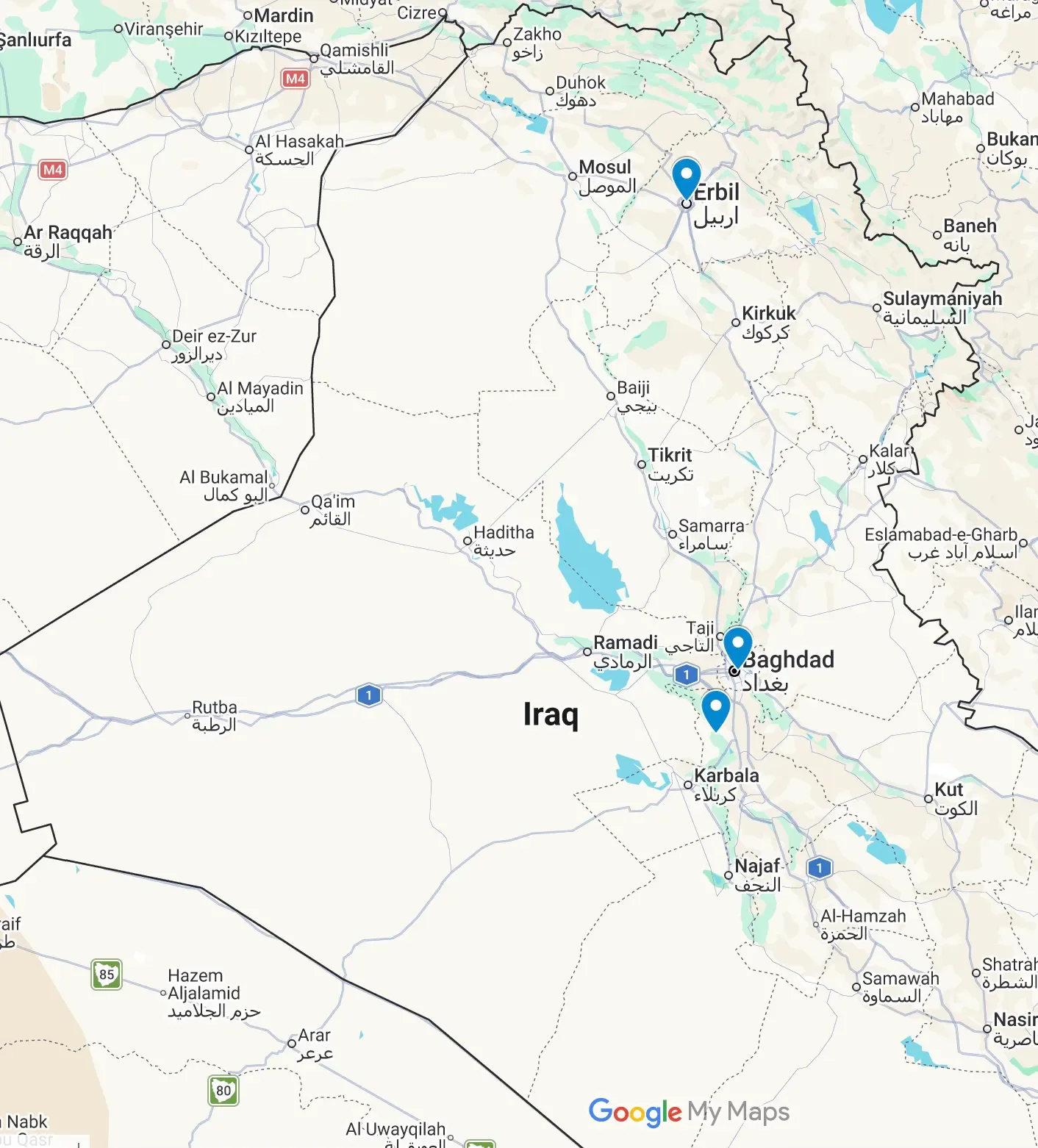
Key sites of militia activity in Iraq referenced in this analysis: Erbil (targeted in coordinated strikes), Baghdad Green Zone (protest activity, PMF pressure on Sudani government), and Jurf al-Sakhar (KH operational base, double-strike target). (Global Recon / Google My Maps)
John Hendricks is an OSINT analyst and founder of Global Recon.
Follow on X: @IGRecon
