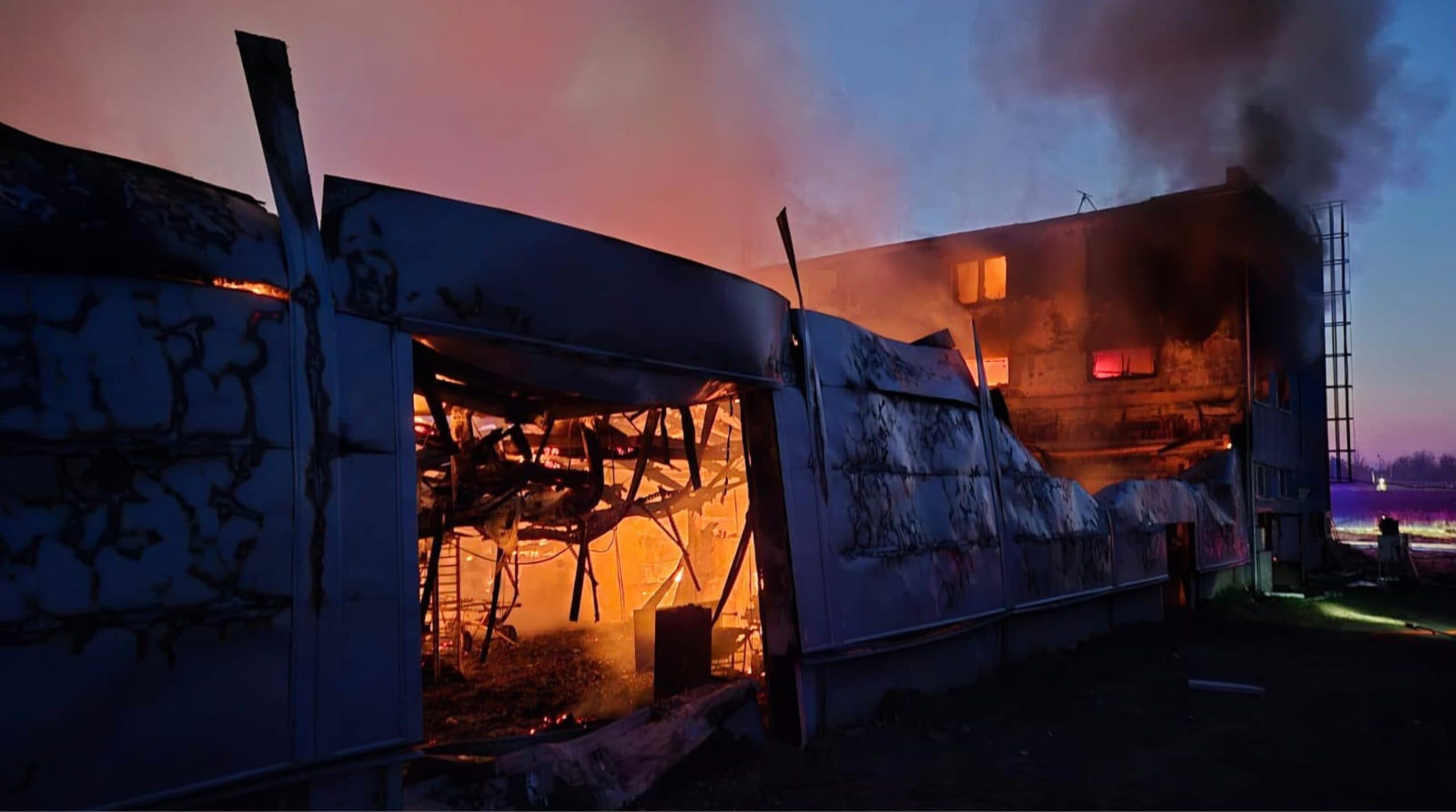
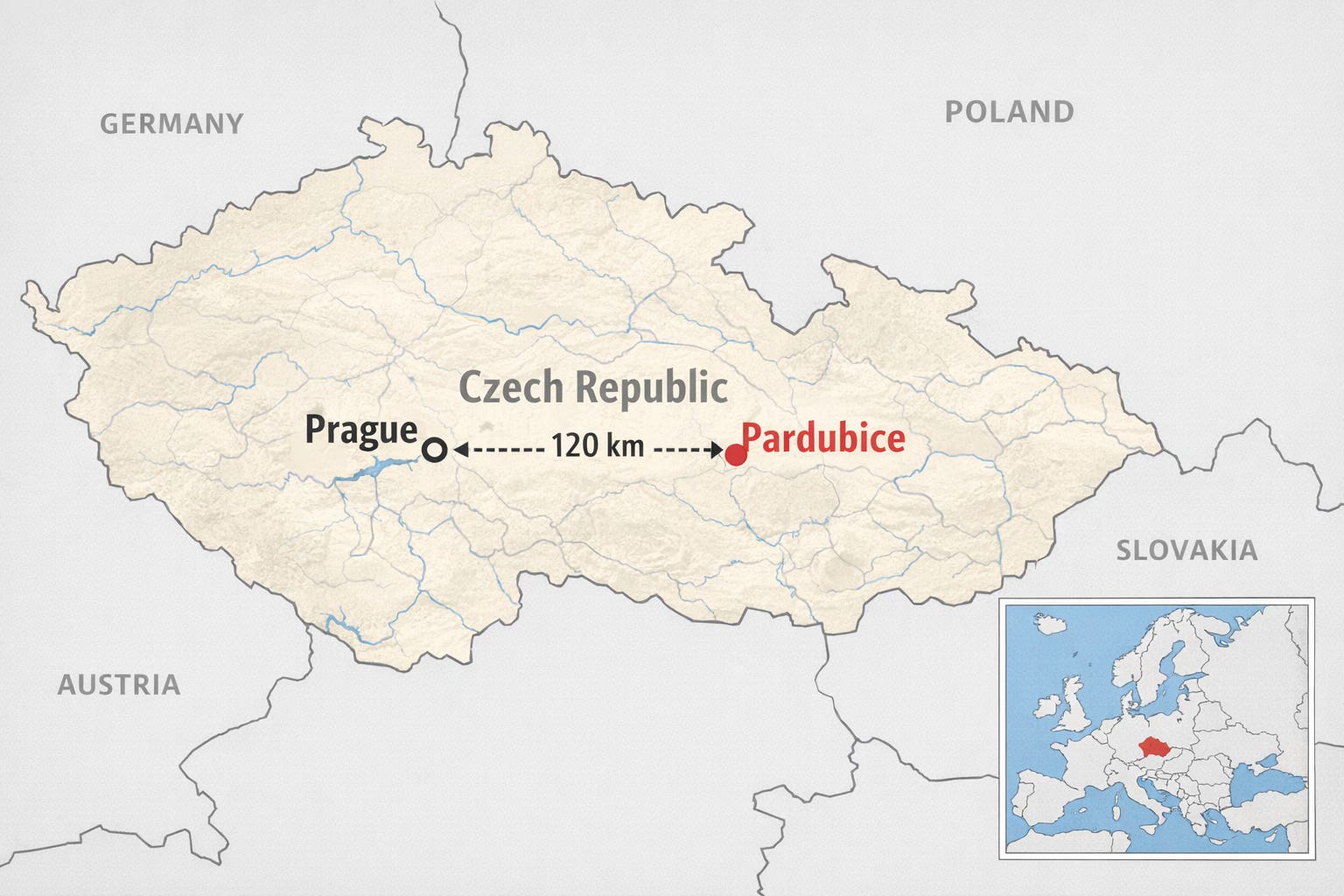
On the morning of March 20, a group of masked individuals entered an industrial complex in Pardubice, Czech Republic, doused a warehouse in flammable liquid, and set it on fire. By the time firefighters arrived, the storage hall was already gone. An adjacent administrative building burned with it.
The group called itself the Earthquake Faction. In a statement sent to Czech journalists the same morning, from a domain registered the day before, they described the facility as “a key production center for Israeli weapons” and named it a joint project of Czech arms company LPP Holding and Israeli defense giant Elbit Systems. They framed the attack as retaliation for genocide in Gaza.
The statement was wrong on the facts. No Israeli drones had ever been produced at the site. A planned cooperation between LPP and Elbit, announced in 2023, was canceled after the Czech Defense Ministry withdrew the relevant tender. The facility that burned was Archer-LPP, a joint Ukrainian-Czech operation manufacturing thermal imaging sights and night vision devices for Ukrainian forces. Czech authorities are treating the incident as a terrorist attack.
What the Earthquake Faction hit was a Ukrainian supply chain node. What they thought they hit was an Israeli weapons plant. The gap between those two things is where this story lives.
What Happened
The fire broke out before dawn. Firefighters extinguished the blaze by mid-morning. No injuries were reported. Archer CEO Oleksandr Yaremenko confirmed on Facebook that almost all production was destroyed, including finished products and equipment mid-manufacture. Czech fire investigators noted the hangar itself contained primarily building materials stored for a planned renovation, not the production equipment the group thought it was destroying.
The damage extended beyond thermal optics. LPP Holding, Archer-LPP’s parent company, had been preparing serial production of the Narwhal cruise missile at the Pardubice complex, a GPS-independent, visually navigated weapon with a 680-kilometer range and a 120-kilogram warhead. Serial production was scheduled to begin in March 2026. Whether the fire affected that timeline has not been confirmed by the company. LPP estimated total damage at hundreds of millions of Czech crowns.
Czech Interior Minister Lubomír Metnar convened a crisis staff the same day. Prime Minister Andrej Babiš canceled a scheduled trip to Hungary and called an emergency meeting of the State Security Council. Police chief Martin Vondrasek confirmed investigators were working on four separate theories, all involving deliberate intent.
Babiš, addressing reporters after the Security Council meeting, drew a specific historical parallel. “We know very well what happened,” he said. “We remember Vrbětice.” In 2014, GRU Unit 29155 destroyed two Czech ammunition depots in Vrbětice, killing two people. The motive was to disrupt arms supplies to Ukraine during the Donbas conflict. Czech authorities confirmed Russian involvement in 2021. The Prime Minister invoked that case within hours of the Pardubice fire.
The Elbit Thread
Nine months before Pardubice, a different group carried out a nearly identical operation in Belgium.
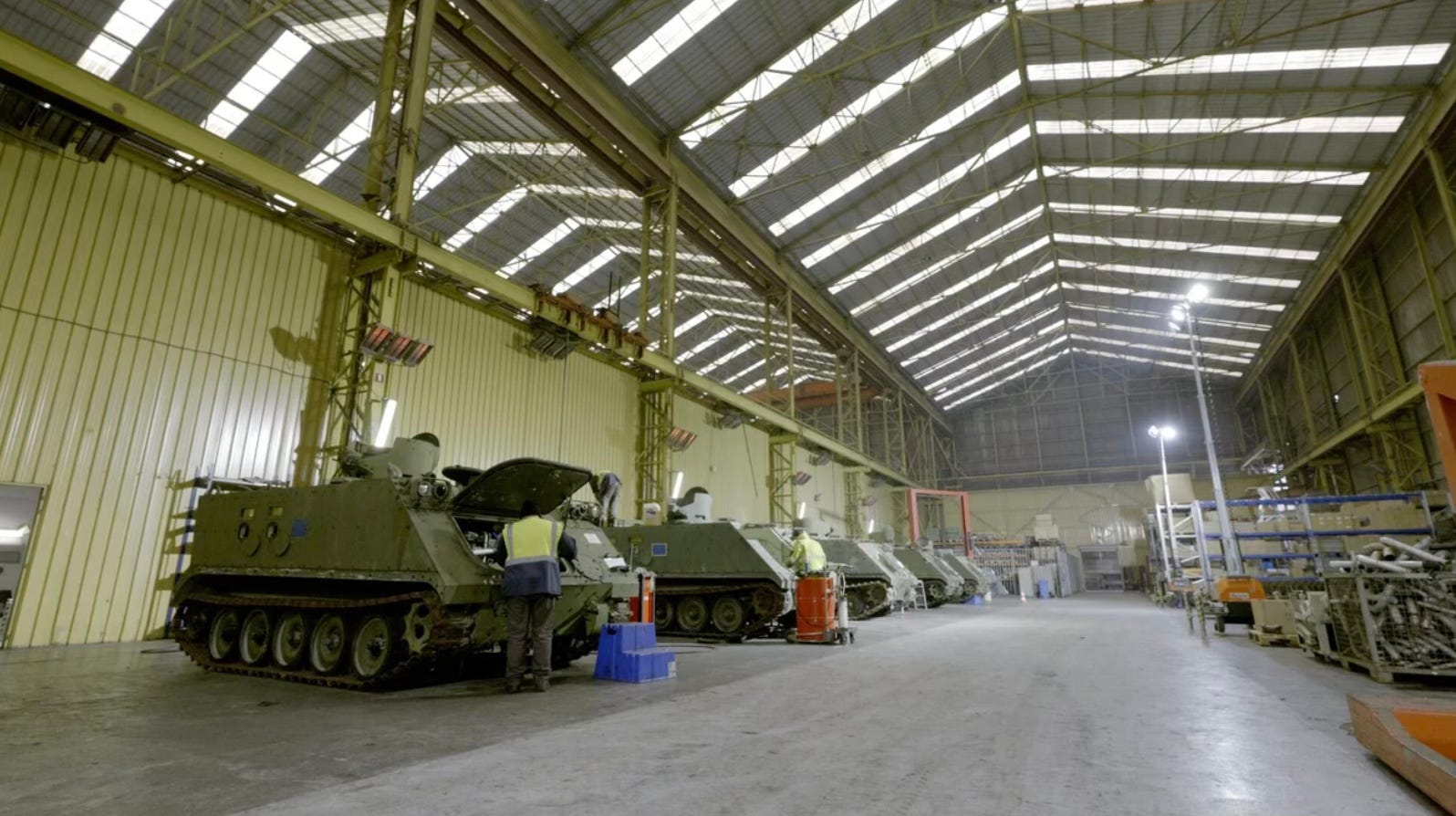
On June 23, 2025, approximately 150 activists from the Stop Arming Israel movement stormed OIP Land Systems in Tournai, dressed in white coveralls with their faces masked. They entered with angle grinders and hammers, destroyed computers, damaged production equipment, and wrecked several armored vehicles. CEO Freddy Versluys estimated the damage at over one million euros. The next delivery to Ukraine was delayed by at least a month.
The activists targeted OIP because it is a subsidiary of Elbit Systems, acquired in 2003. That part of their intelligence was accurate. What they got wrong was OIP’s current business. Versluys told Belgian media the company had not produced defense systems for Israel in over twenty years. The vehicles they destroyed were Leopard 1 tanks being refurbished and shipped to the Ukrainian army. Since Russia’s full-scale invasion, OIP has delivered approximately 260 armored vehicles to Ukrainian forces.
The difference between OIP and LPP is meaningful. OIP is genuinely owned by Elbit. LPP only announced a partnership, one that never moved past the press release stage. Yet both facilities ended up on activist target lists. Both attacks delayed Ukrainian military deliveries.
The Stop-Elbit Belgium campaign published a dossier listing European companies with Elbit connections, including OIP Land Systems. The Stop Arming Israel Belgium campaign separately listed ten Belgian companies it identified as complicit, with OIP prominent among them. These dossiers are publicly accessible and methodically sourced. They were built to pressure governments and investors. They also function as a target directory.
LPP’s exposure came from a different source. In 2023, the company announced a planned Center of Excellence in Pardubice, to be developed with Elbit Systems for drone production and personnel training. Czech media covered it. The Czech Defense Ministry later canceled the tender that would have funded the collaboration, and the partnership never materialized. LPP never issued a high-profile correction. The 2023 announcement remained findable. The Earthquake Faction’s claim cited it by name.
The False Flag Question
Czech security services are not treating the Earthquake Faction’s claim at face value. According to Czech outlet Seznam Zprávy, investigators are actively working on a false flag scenario alongside three other theories. The group has no traceable history in Czech pro-Palestinian organizing. Its domain was registered the day before the attack. Its Telegram channel, created the same day, amassed over 3,600 subscribers within 72 hours, suggesting either a pre-existing network of sympathizers or coordinated promotion.
Former Czech military intelligence chief Andor Šándor flagged the timing publicly. The conflict in Gaza is no longer in its most active phase, making the emergence of a new underground cell now seem out of place. He stopped short of naming an actor but did not rule out external direction.
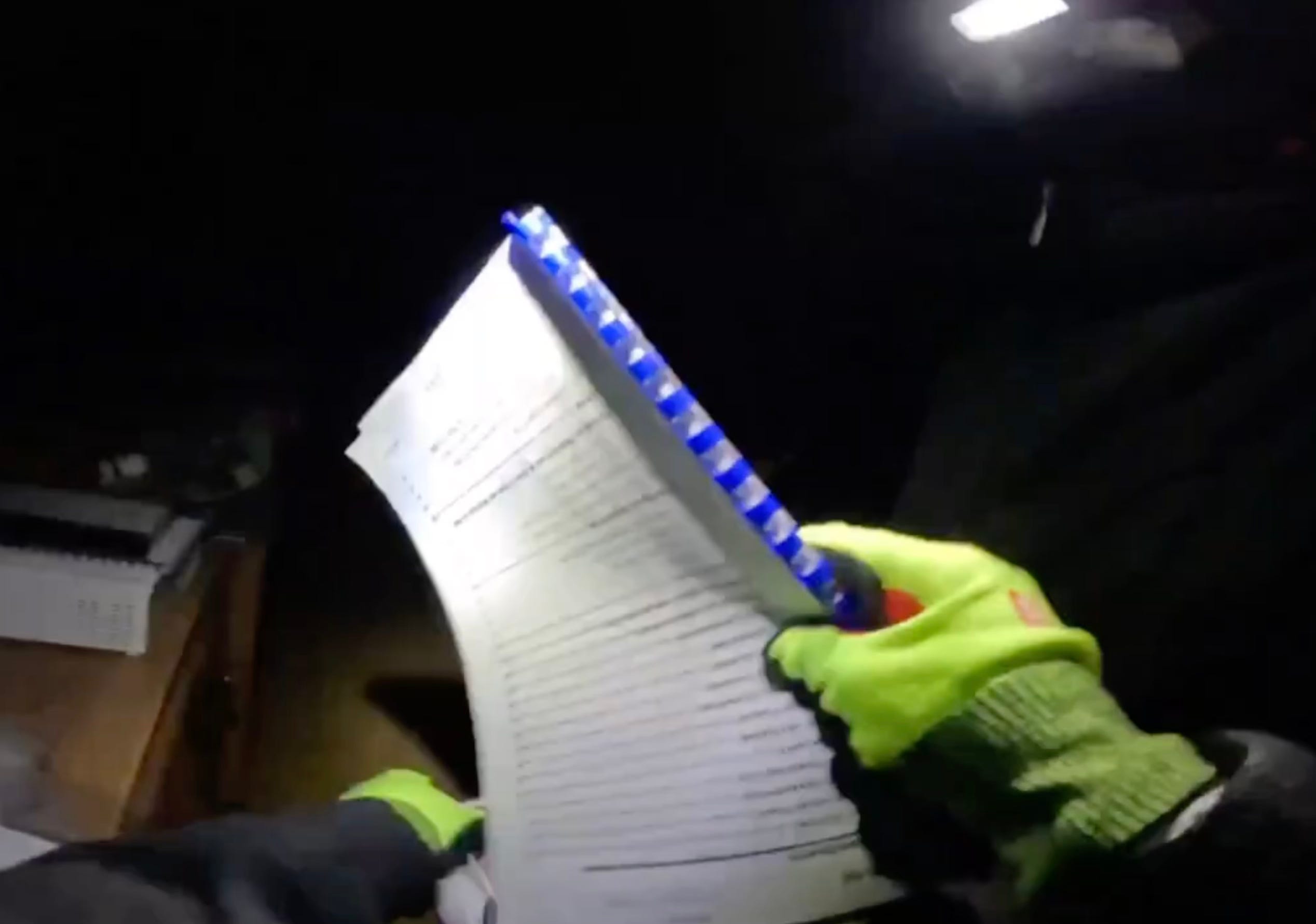
One detail in the Earthquake Faction’s video is harder to explain through an activist frame. Before setting the building on fire, the masked individuals collected technical documentation from inside the facility. In a second communiqué published days after the attack, the group threatened to release these documents publicly if LPP did not sever all ties with Elbit Systems by April 20. Pro-Palestinian activists burning what they believe is an Israeli weapons plant have no obvious use for engineering documents or an extortion timeline. A state intelligence service targeting a Ukrainian drone and optics manufacturer does.
Archer-LPP spokesperson Olha Duplichuk stated publicly that a Russian trace in the attack could not be excluded. The Pardubice attack, if directed or enabled by Russian intelligence, follows the logic Vrbětice established: use an ideologically coherent cover story, target a Ukrainian supply chain node, and let the attribution debate run long enough to slow the response.
The Exposure Problem
Whether the Earthquake Faction was ideologically motivated or state-directed, the operational outcome was the same. Ukrainian military deliveries were delayed. Production capacity for the only Ukrainian manufacturer of cooled thermal imaging sights was destroyed. A facility with no Israeli connection was treated as an Israeli weapons plant because the public record said otherwise.
Elbit’s European acquisitions and announced partnerships generate permanent documentation. Companies that enter Elbit relationships, even ones that never advance, retain the association in public databases, press archives, and activist research dossiers. None of this required classified access. All of it was open source, assembled by people with a political motive but no operational one. The Czech attack did not require accurate intelligence about LPP’s current operations. It only required the 2023 announcement and a willingness to act on stale information.
What Comes Next
The investigation has moved faster and wider than the initial arrest reports suggested. As of early April, at least seven suspects have been detained across four countries: the Czech Republic, Slovakia, Poland, and Bulgaria. Those charged include Czech, American, Egyptian, and Polish nationals. Camera footage from the facility indicates the group consisted of nine individuals, including at least two women. Two Polish citizens, aged 22 and 23, were charged by Polish prosecutors with facilitating a terrorist act. Czech authorities are seeking the extradition of the suspect detained in Bulgaria. None of the accused has admitted guilt.
Czech media have since publicly identified one suspect as Youssef Motus, a Czech citizen of Egyptian origin, adding at least one concrete individual to a case that still does not resolve whether the cell was purely ideological, externally directed, or some blend of both.
The multinational arrest pattern does not, by itself, resolve the false flag question. A genuine activist cell can recruit across borders. So can an intelligence service looking for disposable operators with ideological cover. What the arrest pattern does confirm is that the Earthquake Faction was not a lone actor or a spontaneous local response. It was a coordinated, multi-country operation carried out by individuals who traveled to Pardubice for a specific purpose.
The question Pardubice forces is not whether the Earthquake Faction was telling the truth about its motives. It is whether the Elbit targeting map, built from public corporate records and activist research, has created a durable attack surface against European defense firms supplying Ukraine. A state actor that wanted to degrade Ukrainian logistics without claiming responsibility would not need to invent a pretext. One already exists, assembled in good faith by people who had no idea what they were building.
How many other European companies with disclosed Elbit relationships are currently supplying Ukraine, and who else has read the same dossiers?
John Hendricks is an OSINT analyst and the founder of Global Recon. Follow on X: @IGRecon