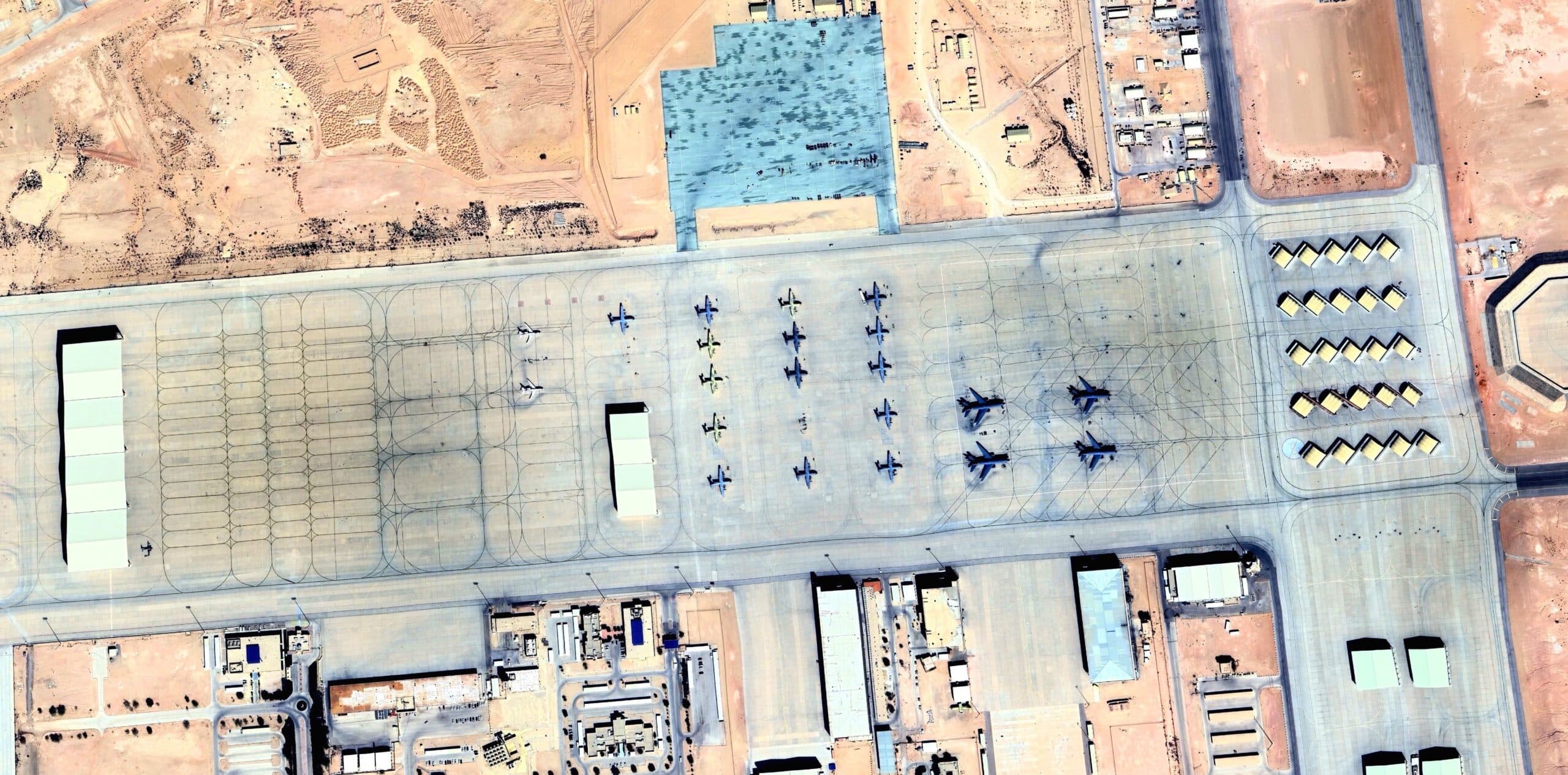
On March 20, Russian satellites photographed Prince Sultan Air Base in Saudi Arabia. They photographed it again on March 23. And again on March 25. On March 26, Iran launched six ballistic missiles and 29 drones at the base, injuring at least 12 US service members and destroying multiple refueling aircraft. Ukrainian President Volodymyr Zelensky shared that sequencing with NBC News on March 28, pulling directly from his daily intelligence brief. “We know that if they make images once, they are preparing. If they make images a second time, it’s like a simulation. The third time it means that in one or two days, they will attack,” he said. He was not theorizing. He was describing a pattern Ukraine has observed across four years of Russian targeting operations against its own infrastructure.
These are not two separate stories. They are one circuit. Leaked Iranian procurement documents, first reported by the Washington Post, indicate Iran supplied Russia with roughly 6,000 Shahed-136s before Moscow achieved domestic production, in a relationship that also transferred the technology to build more. Russia spent four years running that design through the highest-tempo drone warfare campaign in history. It has now sent a refined version back. The weapon Iran is currently firing at US bases, Gulf oil infrastructure, and Israeli cities runs through a production and development pipeline that loops through Tatarstan.
What Russia Built
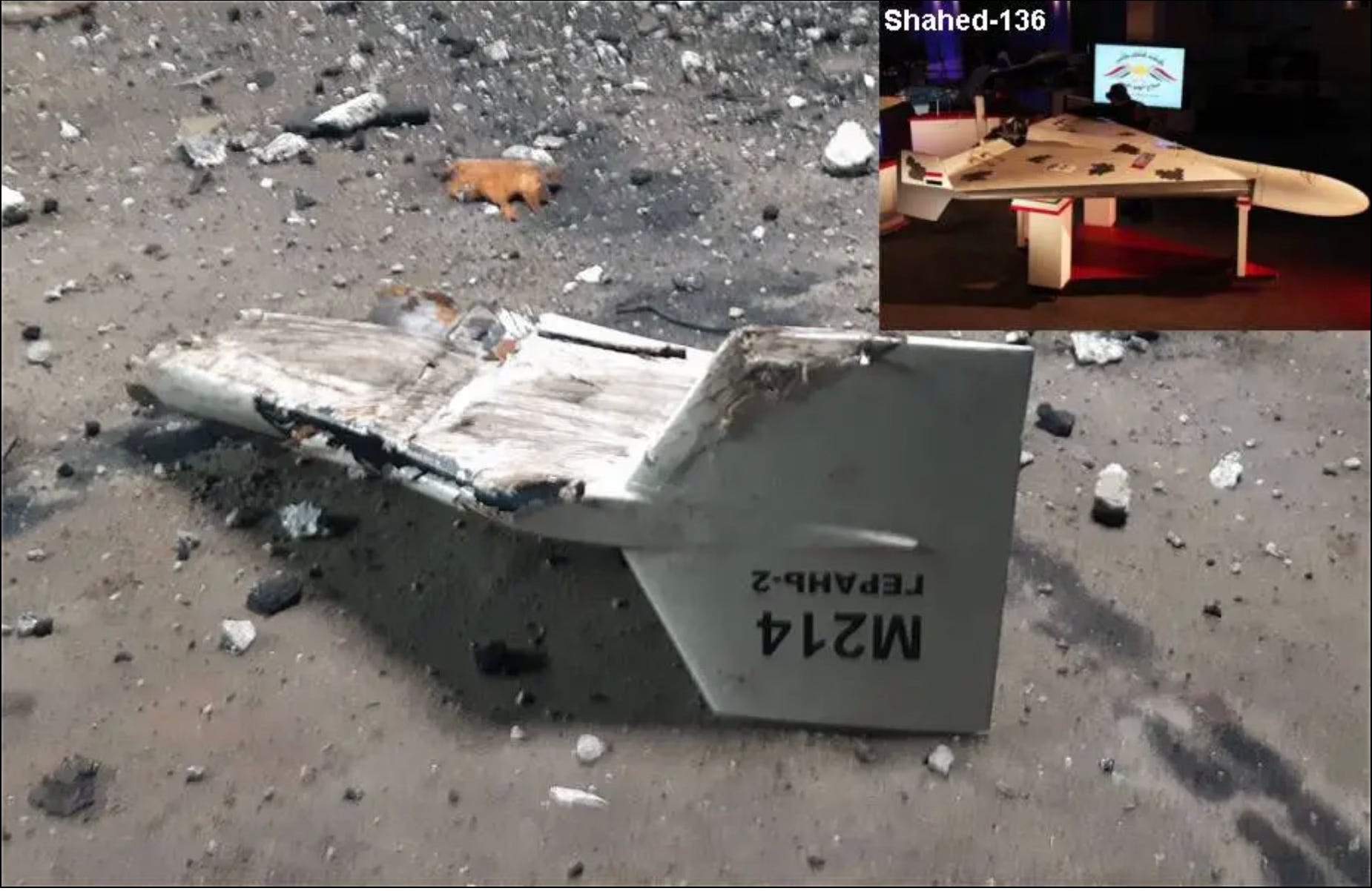
The original Shahed-136 arrived in Russia disassembled and was first fielded in Ukraine in the fall of 2022. Within two years, Russian engineers at the Alabuga Special Economic Zone in Tatarstan had done something Iran had not: put the design through an industrial-scale operational test, launching tens of thousands of rounds and adjusting the airframe, propulsion, and navigation systems based on what got through and what got shot down. By 2024 to 2025, localization of production at Alabuga had reached roughly 90 percent, with Russian industry replacing most imported subsystems, per an Atlantic Council report by Kimberly Donovan and Emily Ezratty published March 25, 2026. In June 2025 alone, Russia fired nearly 5,500 Shahed-type drones at Ukraine, sixteen times the rate of June 2024, according to CNN’s analysis of Ukrainian air force data.
The modifications are not incremental. Autonomy Global, citing intelligence sources, reported on March 27 that the upgraded variants incorporate Kometa-M satellite navigation, a digitally controlled-radiation antenna array that hardens GPS and GLONASS signals against electronic warfare. They also carry jet propulsion variants, AI-assisted terminal guidance, Starlink-capable data links, cameras for reconnaissance, and a reworked carbon-fiber airframe with reduced radar cross-section. The jet-propelled versions present a specific problem for US forces in the Middle East: they are faster, and the anti-drone systems currently deployed in the region are not optimized to intercept them without drawing on limited stocks of high-end interceptors.
Debris recovered from at least one Iranian drone that struck Western forces in the region contained Kometa-M navigation components identical to those found in Russian weapons used over Ukraine, per Autonomy Global’s March 27 reporting. Chinese navigation technology is moving through the same supply ecosystem, with Chinese electronics intermediaries feeding components into both Russian and Iranian drone production. When US forces intercept an Iranian Shahed in Saudi Arabia, they may be intercepting a weapon whose guidance system was developed and validated over Kyiv, and whose supply chain runs through Beijing.
Targeting the Factory
Ukraine has understood this circuit since 2022. Iranian IRGC officers were present in Russian-occupied Crimea in October of that year, helping Russia operate the Shaheds against Ukrainian cities. On November 24, Ukraine announced it had killed ten of them and stated that Iranian military personnel in occupied territory would continue to be targeted. IRGC officers operating a weapon against Ukrainian civilians are a legitimate military target. Kyiv treated them as one.
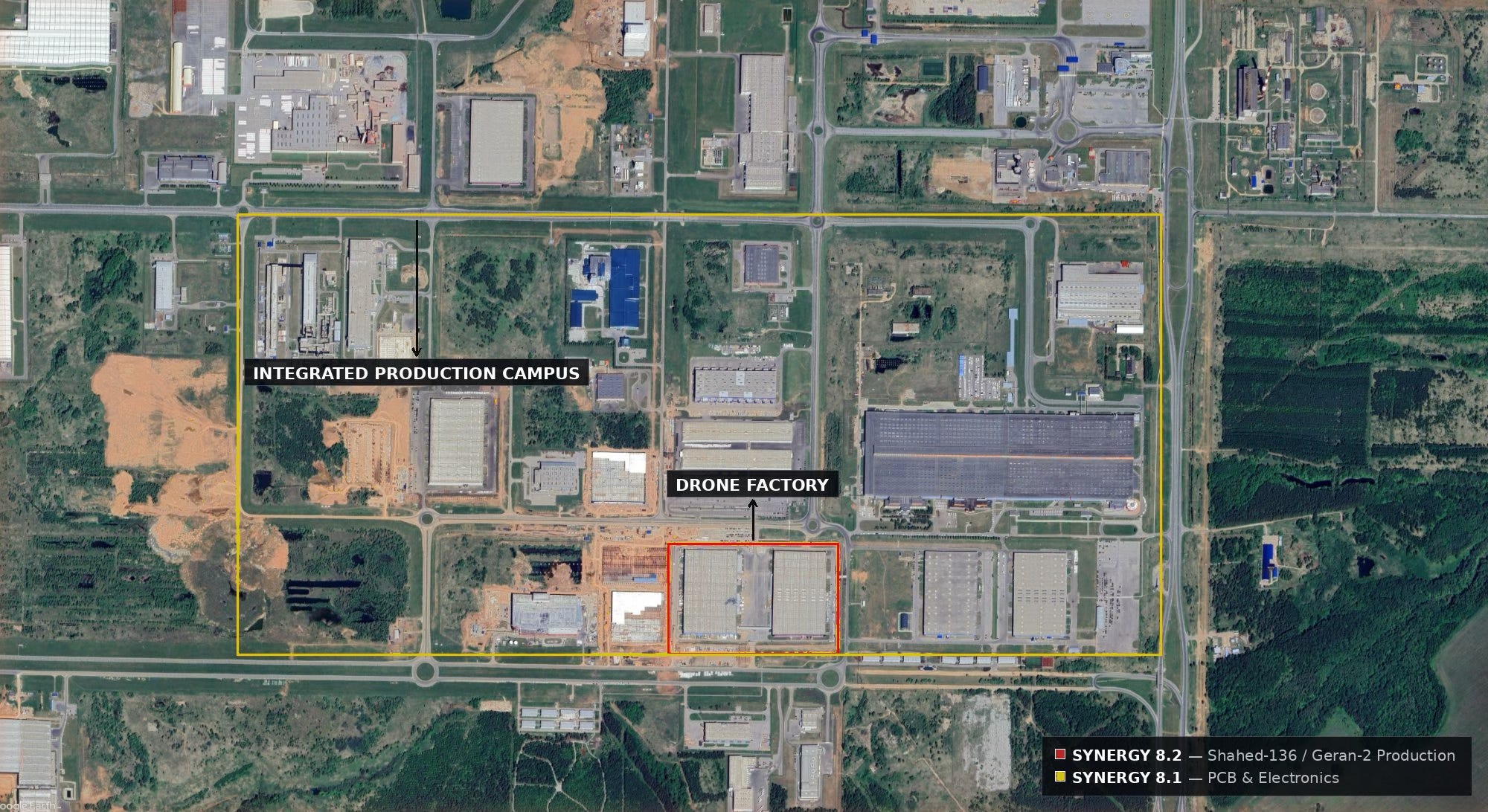
The production node came next. Ukraine’s General Staff confirmed a strike on Alabuga on April 23, 2025, targeting a facility its own assessments placed at up to 300 Shaheds and Gerans produced per day. It was the second confirmed Ukrainian strike on the site, following an April 2024 hit. A third strike followed on June 15, 2025, killing one person and injuring 13, several of them foreign students doing forced assembly work. Local geolocated footage confirmed fire at the facility. Russia publicly boasted of complete localization in a July 2025 Zvezda documentary, Alabuga’s director general describing fully domestic production from aluminum bars to finished carbon-fiber airframes. Ukraine’s own defense council assessed the 2025 production target at 8,000 to 10,000 combat drones and 15,000 decoys, per Kyiv Post reporting in June 2025. Ukraine has struck Alabuga at least four times. The factory keeps expanding.
On March 28, Ukraine’s General Staff confirmed strikes on JSC Promsintez in Chapaevsk, Samara Oblast, using FP-5 Flamingo cruise missiles. The plant produces over 30,000 metric tons of military-grade explosives annually, including warhead fill for bombs and missiles. Chapaevsk sits approximately 750 kilometers from the Ukrainian border; the actual flight distance of the Flamingo exceeded 1,000 kilometers. Satellite imagery analyzed by OSINT groups confirmed a 30×24 meter hole in Workshop 19’s roof, with burn patterns indicating the warhead detonated inside the structure. It was the second strike on the facility. The first, in April 2025, halted production completely.
Cutting the Corridor
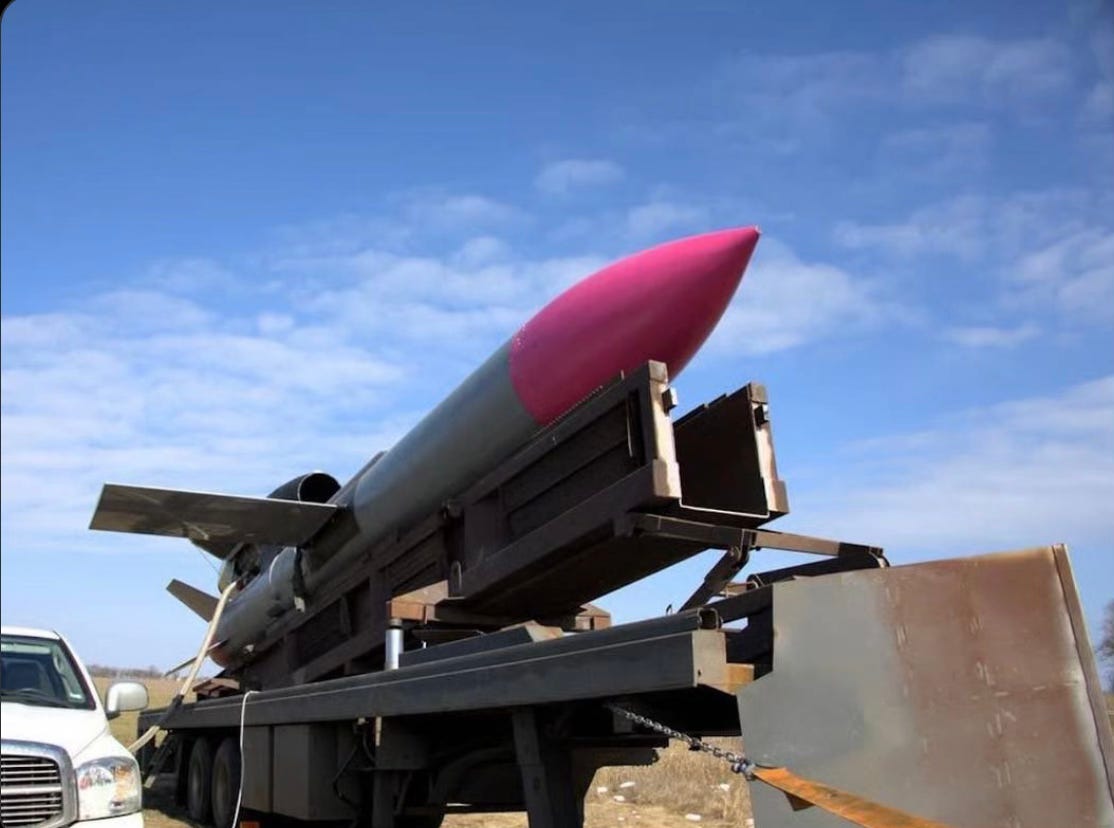
On November 6, 2024, Ukraine struck the Russian port of Kaspiysk in Dagestan, the home base of the Russian Caspian Flotilla, for the first time. At least two Gepard-class frigates, the Tatarstan and the Dagestan, were damaged. The UK Ministry of Defense confirmed the damage on November 15. The flotilla had conducted missile strikes on Ukraine. Kaspiysk is also the northern anchor of the Caspian corridor, the logistics route through which Iranian drones, missiles, and ammunition move north to Russia and through which Russian intelligence, refined technology, and satellite access move south to Tehran.
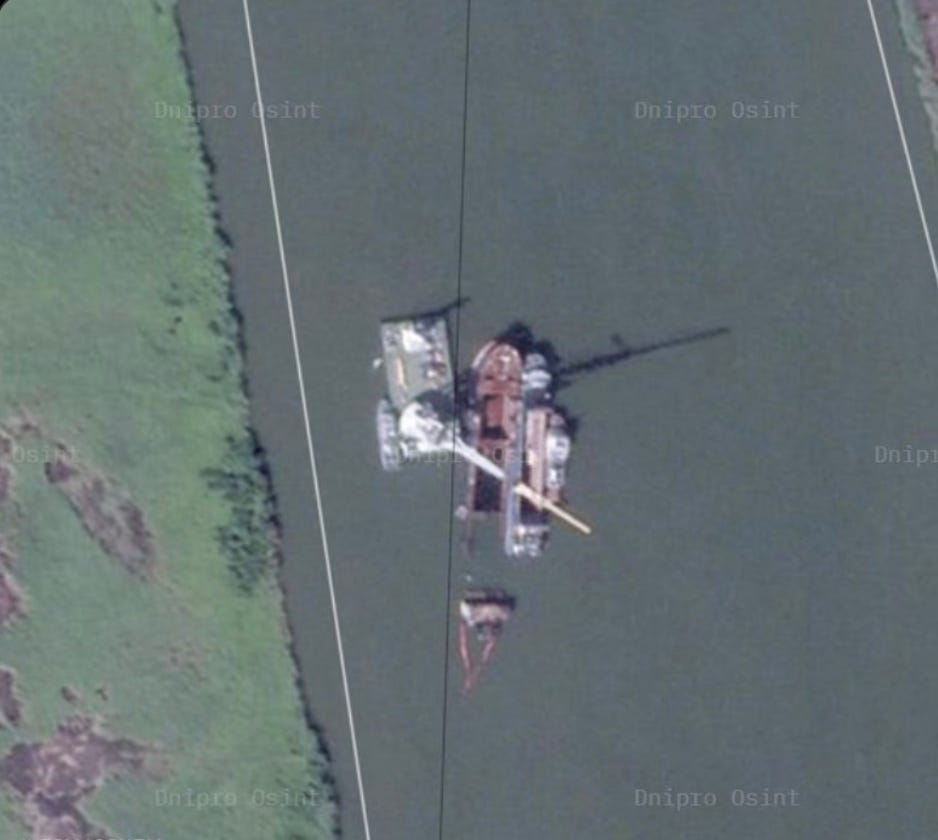
On August 15, 2025, Ukrainian special operations forces sank the Port Olya-4 at the port of Olya, a vessel confirmed by The War Zone to be carrying Shahed drone components and ammunition from Iran. The port of Olya is Iran’s primary supply hub for Russian military shipments, identified in multiple intelligence and analytical reports. That is not a peripheral target. It is the loading dock of the loop. Ukraine followed in December 2025 by striking two vessels already under US Treasury OFAC sanctions, the Composer Rakhmaninoff and the Askar-Sarydzha, both designated for transporting military cargo between Iran and Russia. Ukraine’s special forces stated the operation was conducted with intelligence from a local resistance network. OFAC had sanctioned the vessels for the exact corridor in Ukraine, then physically interdicted.
The Only Country That Has Fought This System
Russia has launched nearly 60,000 Shaheds and Shahed-derived systems at Ukraine since 2022. No other military has absorbed that volume under live fire and built a counter-architecture against it from scratch. Ukraine solved the core economic problem now confronting the US and Gulf states: how to intercept a $20,000 to $33,000 drone without expending a $4 million Patriot PAC-3 interceptor to do it. Ukrainian interceptor drones cost between $1,000 and $2,500 per unit, per Ukrainian defense industry sources cited by Military Times. A Gulf state burning through Patriot stocks at $4 million a shot against drone swarms costing a fraction of that is on a trajectory it cannot sustain.
Ukraine deployed 228 counter-drone specialists to five Gulf states, confirmed by Defense Minister Rustem Umerov on March 20: the UAE, Saudi Arabia, Qatar, Kuwait, and Jordan. Zelensky confirmed Ukrainian specialists had also been sent to a US military base in Jordan. Ukrainian units handle incoming Shaheds; Gulf air defense handles ballistic missiles. The division of labor reflects four years of developed doctrine. BBC News Ukraine reported on March 21, citing its own sources, that Ukrainian specialists had already carried out several confirmed shootdowns of Iranian Shaheds in one of the Gulf countries. Video confirmation of at least one Gulf kill has since emerged publicly. The kills were operational before the footage existed. Zelensky signed 10-year defense cooperation agreements with Saudi Arabia and Qatar during his March Gulf tour. TAF Industries founder Oleksandr Yakovenko told the Financial Times the UAE has requested up to 5,000 interceptor units and Qatar 2,000 more. A $4 million missile to kill a $20,000 drone is a math problem. Ukraine’s interceptor is the answer.

The Intelligence Layer
Russia’s satellite targeting pattern in the Middle East is the same pattern Ukraine has read for four years: repeated imaging of a fixed site over consecutive days, then a strike. Zelensky’s intelligence brief, shared publicly on X, documented Russian satellite coverage of US and allied facilities in the days before the Prince Sultan attack: Diego Garcia and Kuwait International Airport on March 24; Prince Sultan Air Base on March 25; Shaybah oil and gas field, Incirlik Air Base, and Al Udeid Air Base on March 26. Prince Sultan was struck the day after it’s third imaging. No Ukrainian military facilities appeared on the list.
NBC News reported in early March, citing four sources, that Russia was providing Iran with US force location intelligence. German Foreign Minister Johann Wadephul confirmed the assessment on the record at a G7 meeting on March 27, stating that Moscow was providing Tehran with intelligence to identify potential strike targets and framing the cooperation as a deliberate effort to divert Western attention from Ukraine. Lavrov denied it. The documented imaging-to-strike sequence does not require a Kremlin confirmation to establish the pattern. Ukraine has four years of primary source experience reading Russian pre-strike satellite behavior. That is a more credible evidentiary basis than official denials from a government simultaneously shipping upgraded drones to Tehran.
Zelensky stated the contradiction plainly: the US is lifting sanctions on Russia even as Russia provides targeting intelligence used to strike US service members. “If the Russians are doing this, how can sanctions be lifted?” he said in Qatar. The Trump administration temporarily eased sanctions on Russian oil in March 2026 to contain rising global prices, a move Treasury Secretary Bessent acknowledged would benefit Russia. Oil prices had already surged to around $84 per barrel following the Iran war’s opening strikes, well above the roughly $59 per barrel Russia’s 2026 budget requires to balance, per FPRI analysis. Putin’s incentives point in one direction.
The Question the Coverage Is Not Asking
Media coverage treats Ukraine and the Iran conflict as parallel stories that occasionally intersect. They are one system. The Shahed went from Tehran to Tatarstan in 2022. It was refined, mass-produced, and battle-tested over Ukrainian cities. Modified variants are now flowing back to Iran, carrying navigation systems validated in that campaign, striking US bases in Bahrain and Saudi Arabia, oil infrastructure in the UAE, and allied capitals from Kuwait to Amman. Russian satellites photograph US bases. Iran strikes them. Ukraine kills IRGC officers in Crimea, hits Alabuga four times, sinks the cargo ship carrying the parts, strikes the OFAC-designated vessels running the corridor, then deploys its counter-drone teams to protect the Gulf states being targeted by the same weapon.
The US is fighting a weapon system whose full genealogy runs through a war it is simultaneously trying to end. Ukraine’s ambassador to the United States, Olga Stefanishyna, made the underlying logic plain on February 24, 2026, the fourth anniversary of the invasion, after Washington formally complained that Ukraine’s strikes on the Caspian Pipeline Consortium terminal at Novorossiysk had affected Chevron and ExxonMobil investments in Kazakhstan. “I was really, really sorry that in 35 years of Ukraine’s independence, having so many chances, we never brought ourselves to the situation where we can do the same,” she said. Ukraine struck the terminal again six days later.
Every diplomatic concession that relieves pressure on Moscow strengthens the industrial and intelligence partnership, improving the weapons killing US service members in the Middle East. That is the loop. It is closed. The hardest question is not whether Ukraine understands this. The question is whether Washington does, and whether it matters if it does not.
John Hendricks is an OSINT analyst and the founder of Global Recon. Follow on X: @IGRecon