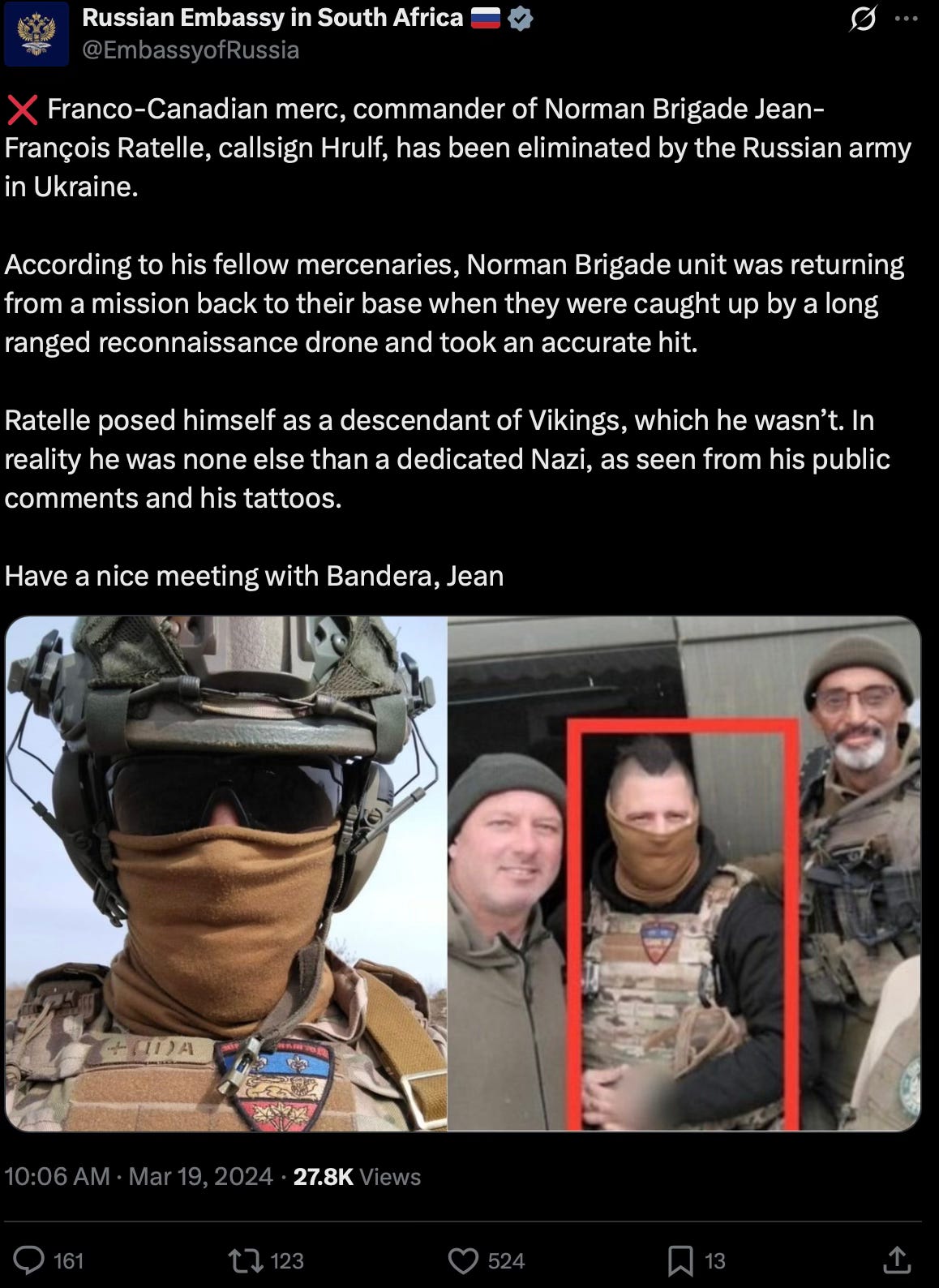
On March 19, 2024, the Russian Embassy in South Africa posted a message on X announcing the death of Jean-François Ratelle, callsign Hrulf, commander of the Norman Brigade. The post read less like a notification than a verdict, written in the language Russia reserves for foreign fighters it wants to strip of legitimacy.
I had spoken with Hrulf at length while he was alive. I knew the man they were describing, and I knew how incomplete that description was.
This is not a rebuttal. It is a record. His words, his reasoning, and his understanding of a war he chose to fight and ultimately died in. I am writing it because he deserves one, and because I was in a position to provide it.
Who He Was to Me
I knew Hrulf through conversation. We spoke repeatedly about the war, about history, about the men around him, and about the decisions he was making under pressure. He was not loud. He was precise. He understood terrain, politics, and the information environment surrounding the war at the same time, without confusing one for the other.
When we recorded our conversation in the summer of 2023, he was calling from Ukraine, where he had been continuously since March 3, 2022. English was not his first language, and he was careful with it. He was equally careful with operational detail. But he was completely unguarded about why he was there and what he believed.
He was not performing for an audience. He was explaining himself.
At the end of the conversation, he told me he hoped to have a break in two or three months. He said that if I wanted him back on, and if he had the time, he would do it.
He never got that break.
Why He Was There
Jean-François Ratelle was from Joliette, Quebec. He served as an artilleryman in the Canadian Armed Forces, then later in the French Foreign Legion, a point of deep pride for him. Ukraine, as he put it, was his third army.
He had been in the country since 2017. Not as a soldier or an intelligence operative. As a person. He had friends there. He fell in love. He married a Ukrainian woman and they had a child together.
When the buildup toward invasion began in late 2021, he started making calls. The Norman Brigade had existed in concept since 2019, originally conceived as a humanitarian mission. Former Canadian and European military men working near the contact line to help civilians on both sides. The Russians never responded to requests to operate. The Ukrainians said it was a reasonable idea, but nothing came of it.
Then came the moment that changed everything.
He told me about a contact, a foreign national, not even Russian, who said something he could not let go.
“He told me, Hrulf, if something happens, we will tell you. But there is one thing I can tell you. Your child would become Russian.”
He paused when he told me that.
“It pissed me off so bad,” he said. “I called the guys and I’m like, OK guys, we’re going to vote. I’m voting to switch this unit into combat. And that was one hundred percent voted yes.”
His wife’s mother would not leave. His wife would not leave her mother. His child was there.
He stayed. He fought.
What He Saw Before the War
One of the most persistent claims used to justify the invasion of Ukraine is that Russian-speaking Ukrainians in the east were being systematically oppressed and killed by the Ukrainian government before 2022.
Hrulf had been there. He knew the people, the families, the towns. He had contacts with the OSCE Special Monitoring Mission. He was not working from headlines.
“Everybody was living in peace,” he told me. “Eastern Ukrainians are Russian speaking, right? But they speak Surzhyk. A mix of languages from village to village. There was absolutely no Ukrainian telling another Ukrainian what language they should speak. None of that.”
On casualty figures, he pointed directly to OSCE data. By 2017 and 2018, civilian deaths on both sides of the contact line had dropped sharply. Roughly twenty per year. The war had settled into something close to a frozen state.
“This whole Donbas thing we hear about, where Ukrainians were bombarding their own population, it is not true,” he said. “They were targeting Russian troops and undercover Russian agents crossing the border and building concentrations of forces.”
He spoke about language with unusual clarity. Drawing a parallel to Quebec, he explained how language is often administrative rather than ethnic.
“I speak English today. Am I English? I speak French. Am I French? No. It’s a tool to understand each other. Russians weaponize this. As soon as you speak Russian, you become Russian in their book. And if you resist, they will destroy you.”
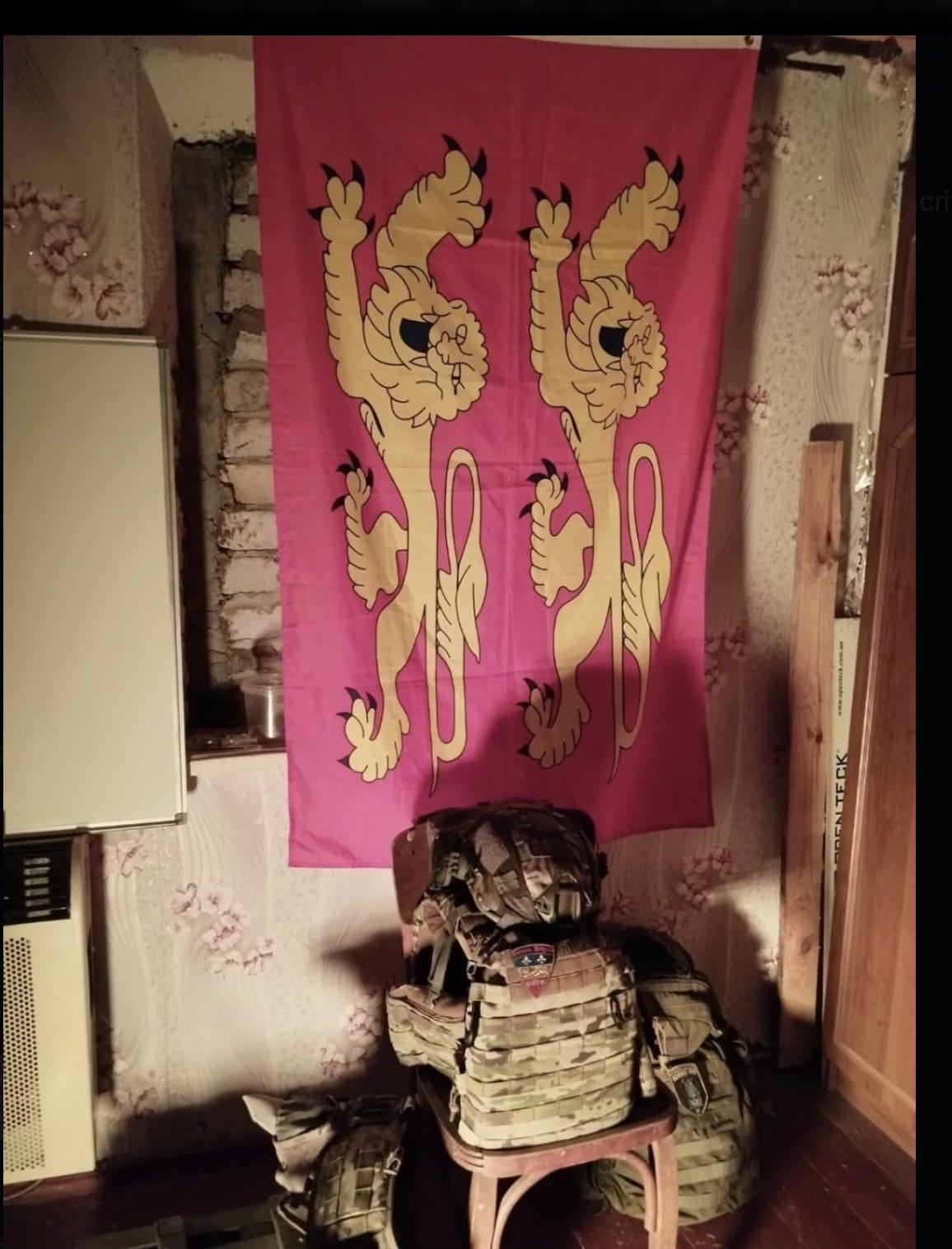
The Norman Brigade
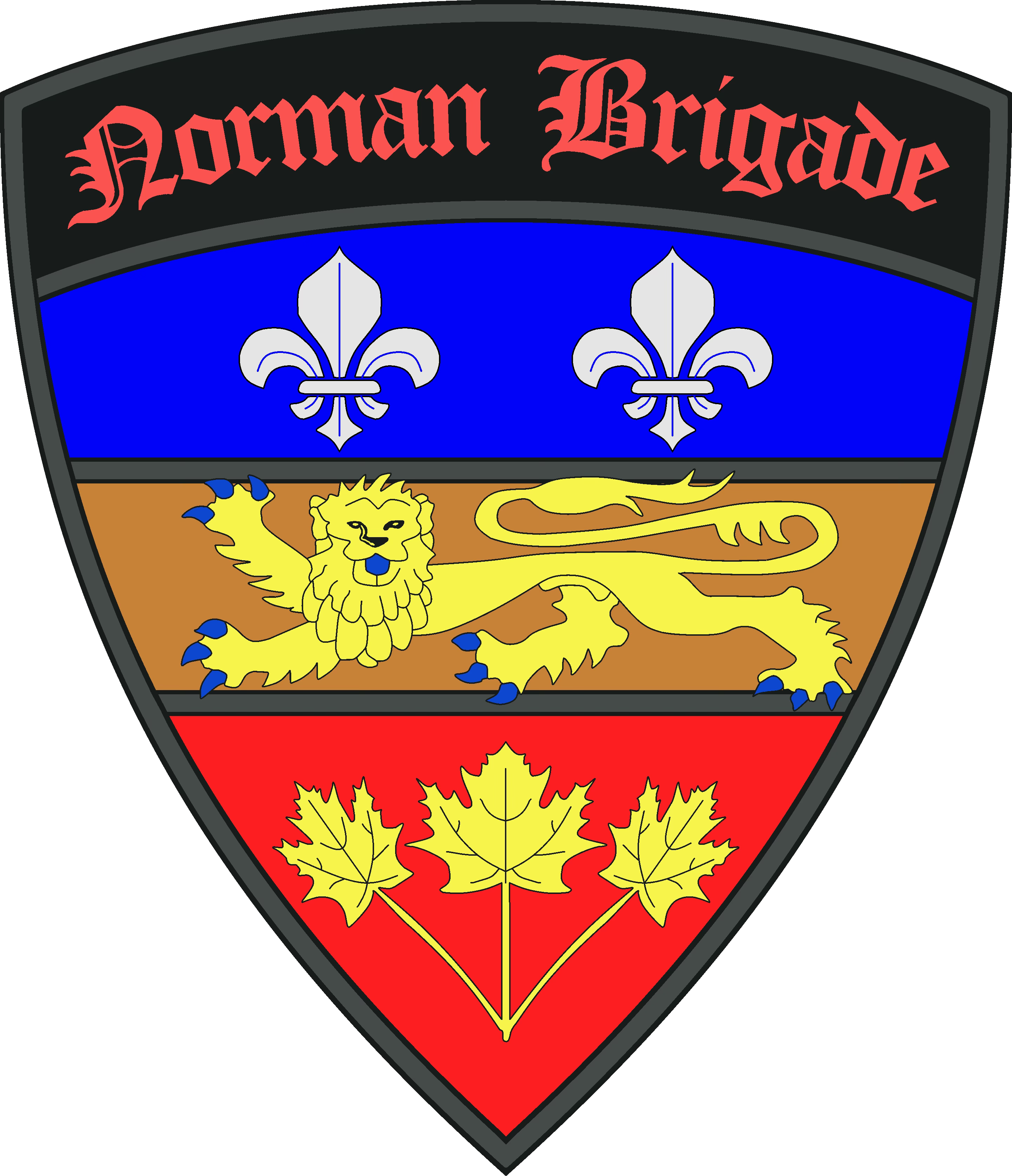
The Norman Brigade was not a brigade in the conventional military sense. It was a small, disciplined international unit made up of Canadians, Americans, Britons, and others. It operated alongside the Ukrainian Volunteer Army, an armed formation approved by Ukrainian command but allowed significant autonomy.
“We were able to refuse if something was stupid,” he said. “We weren’t forced into missions. We chose how to help.”
Over time, their role shifted away from constant direct action and toward reconnaissance, drone operations, target acquisition, and battlefield shaping. He described their work in terms of force multiplication controlling information rather than territory.
A University of Ottawa researcher who studies foreign fighters suggested publicly after Hrulf’s death that the Norman Brigade had shifted toward covert operations in support of Ukrainian military intelligence. I cannot confirm that as a matter of record. What I can say is that nothing about it struck me as implausible. The men he described, and the way he described their operations, were methodical and disciplined in exactly the ways that would make such a role possible.
On the accusations leveled at Hrulf and his unit: Russian state media characterized him as an ideological Nazi upon his death. An allegation about a black sun tattoo had circulated earlier in the war and was disputed by multiple members of the unit who were present at the time. It did not hold up. The broader smear deserves one observation, which Hrulf made better than I could: “Why would you have Canadians, Quebecois, Americans, and freedom fighters literally giving their lives to stop this? It’s not because we believe in Hitler. Most of our families in the past have fought against this evil.”
The Fight
He crossed into Ukraine on March 3, 2022, eight days after the invasion began. He had driven across multiple countries to gather equipment and family, then turned around and headed east. Millions of refugees were moving in the opposite direction. A drive that should have taken sixteen hours took twenty-eight.
They waited briefly in Lviv, where a misunderstanding led to an SBU raid after several foreign volunteers went outside in uniform. He laughed telling me that story.
From there, they moved east. By the end of March, they were in combat. Their first major engagement was a joint operation with the 81st Air Assault Brigade near the Zaporizhzhia-Donetsk border. A five-and-a-half hour firefight through open fields, treelines, and urban terrain.
He mentioned firing an RPG at seventy meters, just beyond the arming distance, as a technical detail rather than a boast.
The Chechens, he noted, did not flee.
“I’m not going to say it’s not scary,” he said. “But professional training allows you to move past that fear.”
How He Thought About War
What stayed with me was not the combat. It was how he thought about it.
He analyzed the Wagner mutiny in June 2023 in real time, describing it as a managed event rather than a genuine rebellion. He spoke carefully, acknowledging uncertainty, but his reasoning was disciplined and largely correct.
On counteroffensives, he focused not on territory but on logistics. Depleting ammunition stocks before committing to large-scale action.
“Even a bad shooter can kill someone at four or five hundred meters,” he said. “It’s better to remove ammunition than bodies.”
On drones, he described the evolution from military systems to commercial platforms modified with cumulative charges. He explained Russian use of the Orlan system to harvest phone identifiers, a detail many Western analysts missed at the time.
He was not performing expertise. He had it.
Loss
Under his direct command, the Norman Brigade suffered no casualties. He called it a miracle.
But he lost people. Joshua Jones, twenty-four, from Tennessee. Clayton Hightower, killed north of Donetsk while applying first aid to a wounded comrade.
He spoke about them quietly. He considered them Normans regardless of whose command they fell under.
His phrase for what kept them going was simple.
“Victory or buddy back.”
Closing
Jean-François Ratelle was killed in Belgorod Oblast in March 2024. His unit was returning from a mission when they were struck by a long-range reconnaissance drone. He was thirty-eight years old.
Russia announced his death before Canada did.
At the end of our conversation, after more than an hour discussing the war, history, and the men still fighting, he said something I have not forgotten.
“Thank you for giving me a voice.”
I told him anytime. Come back when he had a break. Two or three months. Whenever worked.
This is the only record I can give him now. I hope it is adequate to the man.
Jean-François Ratelle, callsign Hrulf, 1985–2024. Founder and commander, Norman Brigade.
John Hendricks is an OSINT analyst and founder of Global Recon. Follow on X: @IGRecon