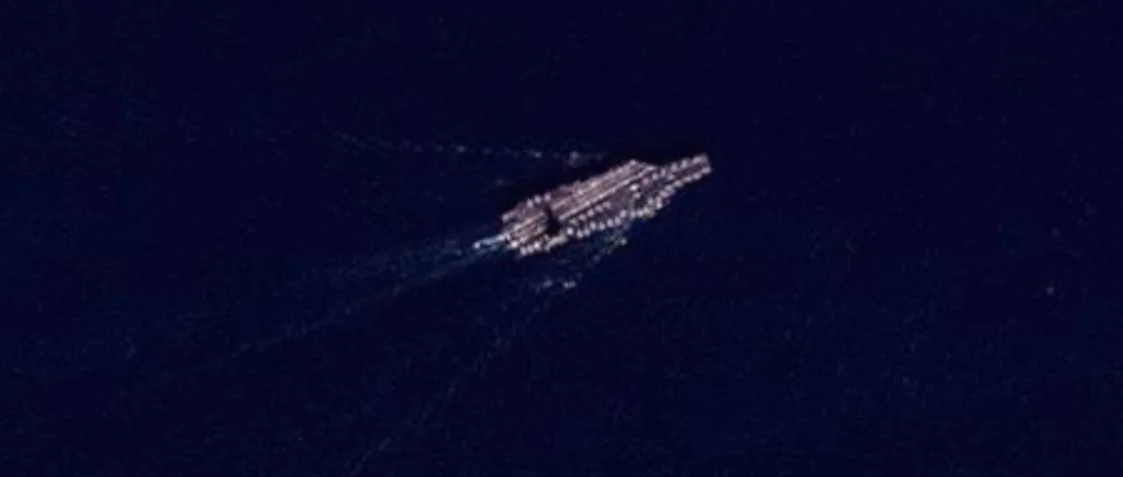
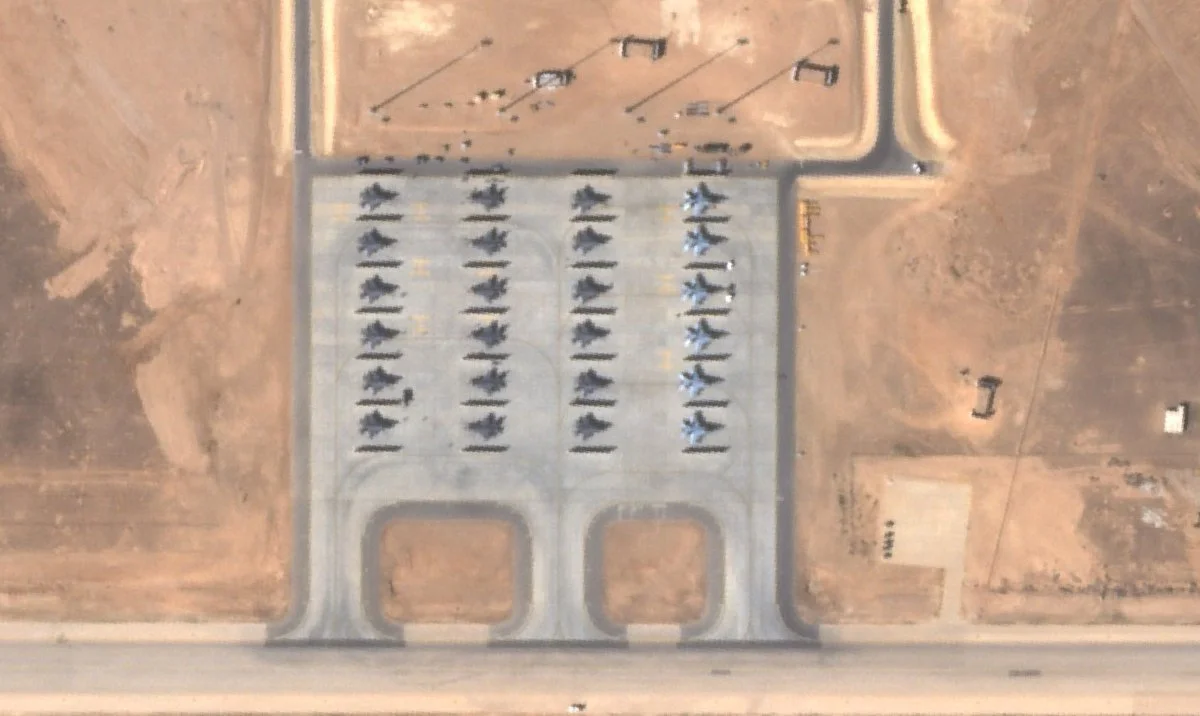
To understand what this means, consider the comparison. Operation Midnight Hammer last June involved two carrier strike groups in the Arabian Sea before B-2 bombers struck three Iranian nuclear facilities. The current footprint closely mirrors that positioning and in some respects exceeds it.
Military planners have reportedly told the president they will be ready to strike soon. The buildup is not ambiguous. Forces of this scale and composition exceed what is typically required for deterrence signaling alone.
The Window
Military operations do not occur in a vacuum. They operate within political, logistical, and environmental constraints. At present, those constraints are converging in a way that will not persist.
The new moon fell on February 17. For military planners, lunar cycles are not incidental. Low-light conditions degrade enemy visual detection, complicate air-defense targeting, and provide cover for complex, multi-platform strike packages like those used in Midnight Hammer.
This is not theoretical. Operation Neptune Spear the raid that killed Osama bin Laden was conducted under a new moon. The original D-Day landings were planned around specific lunar and tidal conditions. Darkness has been exploited as a tactical asset throughout recorded military history, and the U.S. military is no exception.
The new-moon window is already closing. The moon is waxing. Within seven to ten days, nighttime illumination will increase significantly, diminishing this advantage.
The window is open now. It will not remain so.
Deception Doctrine
Those who believe that diplomacy alone will prevent a strike should examine how this administration has operated in the past.
On June 21, 2025, as diplomatic channels remained open, seven B-2 Spirit stealth bombers departed Whiteman Air Force Base in Missouri. A separate group of B-2s flew west toward Guam a deliberate decoy designed to misdirect Iranian air defense and military intelligence. The actual strike package flew east over the Atlantic in near silence. Iran never saw it coming. Its fighters did not launch. Its air-defense systems did not fire.
Less discussed is that Trump’s publicly stated two-week diplomatic window before Midnight Hammer was later confirmed as deliberate misdirection not a genuine negotiating timeline, but signal suppression while strike assets were already moving.
The current picture looks familiar. Geneva talks. A stated 10- to 15-day diplomatic deadline. Public activity suggests time remains.
The question is not whether diplomacy is occurring. It is. The question is whether it is the main event or the cover story.
This administration has used this template before. There is no reason to assume the next engagement will look different from the outside until it is already underway.
Pattern, Not Personality
Donald Trump has now followed the same sequence twice with Iran: issue a warning, face skepticism, execute.
In January 2020, Trump ordered the assassination of Qasem Soleimani, Iran’s most powerful military figure and the architect of its regional proxy network. The strike was widely dismissed beforehand as too escalatory, too risky, politically impossible. Trump carried it out anyway.
In June 2025, Trump warned Iran that its nuclear facilities would be targeted if talks failed. Many analysts treated the warnings as leverage rather than intent. Operation Midnight Hammer proved otherwise.
In both cases, the pattern was consistent: public warning, active diplomacy, dismissal by observers, execution.
That pattern now defines this administration’s approach to Iran. It is not impulsive. It is methodical. The warnings are real. The diplomatic windows are real. And when those windows close, this president has demonstrated a willingness to act.
The indicators today align more closely with these previous sequences than with any scenario in which diplomacy produces a last-minute breakthrough.
Assessment
The assessment is this: the military positioning is among the most significant U.S. force concentrations in the region in decades. The tactical window created by the new moon is open now and closing within days. This administration has twice demonstrated that its warnings to Iran are not rhetorical and that diplomatic engagement can coincide with strike preparation rather than delay it.
A strike is not certain. Iran could produce an offer substantial enough to alter the calculation. The diplomatic track is real and should not be dismissed entirely.
But the weight of open-source indicators the assets, the timing, the established pattern points toward action rather than restraint.
If this window passes without a strike, the assessment weakens. If military assets remain in place, diplomatic language hardens, and indicators continue to accumulate, it strengthens.
Watch the next seven days.